
Regd. No. 131741/071/072 WhatsApp No. +977 9841073239 himalayadarshantreks@gmail.com

"Your Trusted Gateway to the Himalayas"
Per person - All price inclusive
The Lumba Sumba Pass Trek was first established in 2012, so it is still relatively unknown in comparison to other treks. The journey extends through the Kanchenjunga Conservation Area and the Makalu Barun National Park in the eastern section of the country. The Lumba Sumba Pass connects the Kanchenjunga and Makalu regions. It can be done in two directions, starting in Kanchenjunga or Makalu.
The journey travels through scattered pockets of human habitation, such as villages and monasteries. Similarly, in markets and schools, there are typically designated days for activities. When trekkers are utterly alone in the wilderness.
There have been sightings of snow leopards during these off-the-beaten-path days. Which would undoubtedly add to the adventure! Bird watchers will have the opportunity to see several unusual and uncommon species. After crossing the pass, trekkers will travel into the Arun Valley.
It is a straightforward descent to the remote town of Thudam after crossing the Lumba Sumba hill. Continuing the walk after Thudam is difficult since the narrow track becomes overgrown with bamboo brushes and is challenging to find. Finding a campsite during this stretch of the Lumba Sumba pass hike is challenging.
The best time for Lumba Sumba trekking is spring and autumn. These seasons occur between February and May, and September and November, respectively. These seasons provide the most incredible views and the most spectacular natural surroundings. The Lumba Sumba Trek can be done in other seasons, such as monsoon and winter, although the weather can be harsh and brutal.
We, Himalaya Darshan Treks, heartily welcome you and your group to Nepal. One of our company staff will take you to your hotel in Kathmandu. The person will be waiting outside the baggage hall of the Tribhuwan International Airport, Kathmandu, holding an A4-size paper with your name and our company name. So, you have to look for that person for your pickup from the airport. Your check-in at the hotel.
After breakfast, sightseeing in world heritage sites in Kathmandu such as Swoyambhunath (Monkey Temple), Boudhanath, Pashupatinath, and Basantapur durbar square, then back to the hotel. This day is required to make the Kanchenjunga-Makalu Trek special permit with your original passport.
We will transport you to the domestic airport, where you will board an internal flight to the southeastern area of Nepal. Bhadrapur is in Nepal’s tropical Terai area. We will pick up our vehicles at Bhadrapur and go on a two-day drive into the Himalayas. We drive through a wonderful scenery of agricultural farmland and little towns that quickly transitions to hills as we head north. As we ascend into the foothills, we will arrive in Kanyam. Stay at the hotel.
The drive continues into the Himalayan foothills’ stunning terrain and river belt. Every bend reveals breathtaking views of white snow-capped mountains. We arrive in Taplejung, a small settlement at the end of the route (1,820 m). After a late lunch, we continue our journey to Chhiruwa, where we will meet up with our team. Stay at the tea house.
Today’s path entails walking along the Tamor River’s riverbank. You will first travel to Tapethok village. To get to Tapethok, you’ll have to walk through magnificent cardamom gardens. You need to check in your Kanchenjunga entry permit at the Conservation Office at Tapethok. Finally, you’ll arrive at Lelep. Stay at the tented camp.
Today’s excursion is going through a deep forest. The woodland provides a natural habitat for various wild species. If you’re lucky, you might see some wild animals like red pandas, musk deer, and snow leopards. You’ll cross the Tamor River and make your way up to Chautaro. Ila Danda is within a 20-minute walk from Chautaro. Trekkers can enjoy panoramic views of the icy mountains and the Tamor River from Ila Danda. Stay at a tented camp.
For the first hour, you will stroll through rhododendron woodland. Many trekkers refer to it as the red panda’s home. You might see some red pandas as you walk. You will journey towards Maguwa after around three and a half hours of trekking from Illa Danda. Crossing the landslide region should be done with caution. Selep Kharka is about a one-and-a-half-hour walk from there.
You will need to walk for a lengthier period today. The route will take you along the Tamor River’s bank. Walking through the rhododendron forest takes another 40 minutes. Thereafter, you’ll cross a suspension bridge. From the bridge, you’ll be walking uphill toward Ramite. Continue your journey after crossing the suspension bridge. Olangchung Gola is a lovely Sherpa settlement. A 465-year-old monastery with a golden cloister is located in the town.
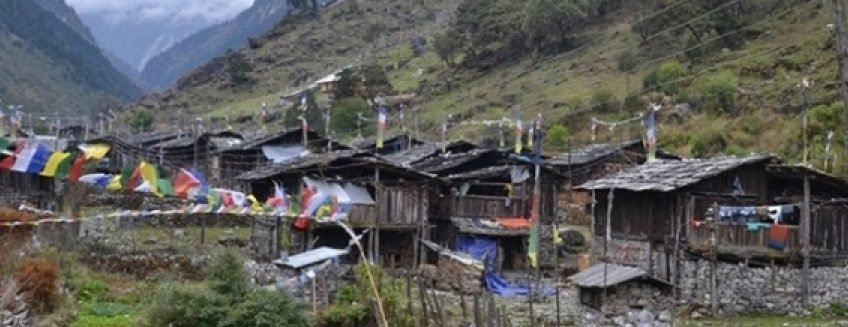
Today is an acclimatization day. You will have a full day to see the region’s fascinating communities. Stones are commonly used to construct homes in this area. Most people here are Tibetan-influenced and follow Tibetan life and culture. Most locals are involved in activities such as trading Tibetan and Nepalese goods. Furthermore, you can continue your trek to Yangma.
You’ll have to walk in the middle of nowhere starting today. You’ll come across various stone piles that serve as navigational aids. Jadak is a settlement in the region that is 3636 meters above sea level. You’re going to eat your lunch there. From there, you’ll be walking on a snowy route. The Upper Langmale camping spot is about a three-hour trek from Jadak.
You’ll be heading toward Tamor Khola today. To go to Lumba Sumba, you’ll have to climb uphill for 3-4 hours. The route then descends to Dinsangba Khola along a downward trail. Further walking will lead you to an icy pond, from which you will climb to the summit of the Pass Camp’s northern crest. The pass camp is located at the highest point before the pass.
You’ll ascend about 700 m to the Lumba Sumba Summit (5,210 m) and then trek down into a large valley after passing across the Lumba Sumba Pass. To get to Chauri Kharka, the trail travels through various yak pastures. Lumba Sumba Pass Trek is about a 3-hour trek from Chauri Kharka.
The hike today is a downward stroll from the Chauri Kharka. After three days of exhausting walking, you will finally reach civilization. After that, there will be a short ascent followed by a typical walk to the alpine woodland. Thudam can be reached after a four-hour trek from there. Thudam is a lovely village with residents that have Tibetan influences.
Today you’ll hike to Kharka after exploring the secluded village of Thudam. Walking along the banks of Chujung Khola is part of the trail. You’ll pass through little bushes and bamboo groves to Kharka. The route is also known for being the home of the red panda. So, if you’re lucky, you might catch a glimpse of a red panda. Thereafter, you’ll continue downhill to Kharka, where you’ll find an isolated yak herders’ camp.
Today you’ll begin with a short ascent to a settlement. The town is in the middle of the Arun Valley, above the river. After that, you’ll descend along a muddy trail to the Arun River. You’ll trek upward toward the settlement of Lhomi after passing a bridge. Thereafter, the community will lead you to Chyamtang. The settlement of Chyamtang is inhabited by Sherpa people. In the territory, there are few tiny houses.
Today you will take a trip through a rhododendron forest. The journey will be relatively simple. As you approach the Arun Valley, you’ll stop at several of the most popular birding spots. Climber village is about a two-and-a-half-hour hike from Chyamtang. After a three-hour walk from Glimber village, you will arrive at Hatiya. It is a tiny village populated by Bhote people. It serves as the gateway to Makalu National Park.
You’ll have to stroll alongside the Arun River to get to Gola. After around two hours of walking from Hatiya, you will reach the confluence of the Arun and Barun rivers. Lunch will be served near the river’s confluence. Following your lunch, you will go to Gola. The final destination of the day is Gola.
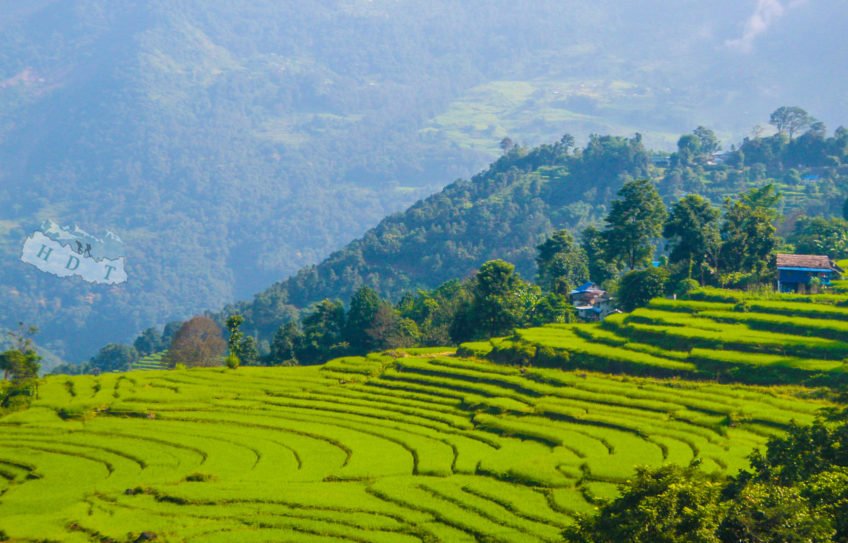
The hike entails traveling across rice fields in the lowlands. After a two-hour hike from Gola, you will arrive at Pathibhara. Following that, the trail continues through agricultural areas and small towns. Hedanga Gadi is reached after a three-hour hike from Pathibhara.
From Hedangna, you will descend to Num on the last day of your trek. You’ll have to trek downhill for around an hour to get to the Arun River. You’re going to cross the river. After crossing the river, you’ll begin an ascent towards the Num settlement. It is a sizable town situated atop a hill overlooking the Makalu area. You will drive to Tumlingtar, passing through lovely villages.
We fly back to Kathmandu on a 45-minute scenic flight, with our final views of the spectacular snow-capped Himalayas. When we arrive at Kathmandu airport, our representative will be waiting for our airport pickup. This evening we invite you for a farewell dinner with a cultural performance at a Nepalese restaurant.
This will be the last day of your trip in Nepal. One of our staff will take you and your group to Tribhuwan International Airport, Kathmandu, for your final departure. We wish you and your group safe flights with unforgettable memory from your Nepal trip. Hope to see you again.
Are you planning to visit the Kanchenjunga region and looking for a...
Pathivara Pilgrimage Trek with Himalaya Darshan Treks—A Journey of Faith, Culture, and...
Trek to Kanchenjunga Base Camp: The Wilderness Trekking in Eastern Nepal. The...
The Kanchenjunga Circuit Trek is an incredible chance to reach both base...